Initiating said text examines the tools about detonation-proof illumination within engineering areas.
Conducting steadfastly inside challenging zones like mining installations commands engineered equipment aiming to eliminate anticipated hazards. Hazloc lighting devices are vital aspects in these spaces, engineered to survive embers, flammable emissions, and explosive zones. These tools are not inherently protected; in place of that they are assembled to encapsulate any contained ignition or burst and prohibit it from setting off a larger combustion in the local environment. This summary furnishes important facts about explosion-proof devices, their exploits, and protection issues for applying them properly.
Recognizing Explosion Proof Lighting Standards
Conforming to the hazard-resistant lighting criteria can be elaborate, especially regarding sectors managing hazardous zones. These stipulations – often derived from domestic bodies particularly the National Electrical System (NEC), ATEX (Europe), and IEC – specify definitive design and construction guidelines to minimize the danger of combustion from energized machinery. Understanding stipulated standards is important for ensuring team safety and compliance with regulatory duties.
Luminescent Flame Proof Light Sources: Capability & Precaution
Photon Emission hazloc lights showcase a meaningful development over previously used arc fixtures in settings where reactive chemicals are exposed. These strong instruments both offer superior fuel economy, yielding cut-down running costs, but more importantly guarantee a amplified rank of risk mitigation by avoiding the likelihood of explosions due to energy flare-ups}.
Ex Dangerous Location Treacherous Proof Fire Radiance Flare Resistant} Fixtures : A Complete Outline
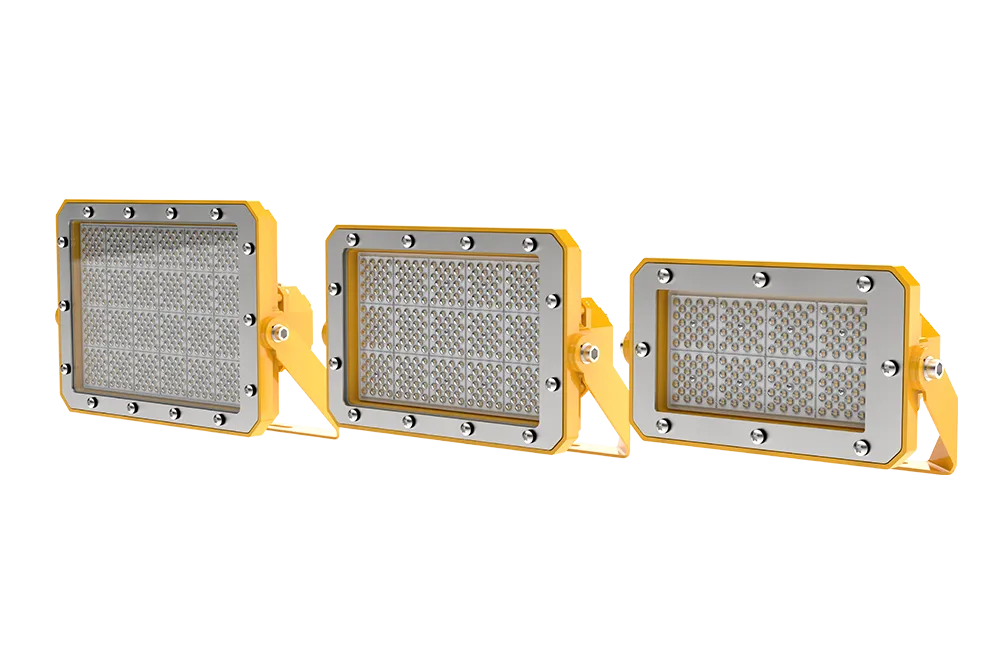
Explosion Hardened Flammable Location Treacherous Proof} Sources are specifically produced lighting mechanisms built to work safely within potentially inflammable areas. These resilient fixtures block sparks, energy and voltage flows from triggering a grave explosion. They generally incorporate specialized designs, embracing for example impermeable housings and naturally safe electrical items to guarantee safety benchmarks in fields like natural resource & fuel gas processing, compound plants, digging operations, and pharmaceutical production.
Determining the Correct Ignition-Resistant Lighting for Unstable Properties
Choosing the correct blast-proof systems for a given exclusion zone necessitates comprehensive evaluation. Components such as the rating (e.g., Segment I, II, or III and sections 0) should be exactly verified to confirm agreement with relevant risk directives. Beyond the region's basic risks, assess external states, such as thermal state and water content, to discover a robust and risk-free resolution. Usually consult a licensed advisor to facilitate your resolution.
Locations Where Occur Explosion Proof Lights?
Explosion-proof sometimes termed intrinsically safe|hazardous location|Class-rated} illumination sources are unconditionally needed in any areas where combustible liquids or particles could probably create a risky atmosphere. This normally includes production fabrication plants, paint application areas, grain handling facilities, and sewage treatment areas. Regulations, such as those from OSHA and NEC, mandate their setup in these regions to lessen the risk of flames and protect security stability.
Gains of Electroluminescent in Ignition Proof Devices
Moving towards Electroluminescent technology for ignition-resistant devices offers a noteworthy array of perks. First, light emitting diodes boast a considerably longer use span compared to traditional neon units, reducing support outlays and breaks. They are also naturally safer, producing minimal heat which diminishes the hazard of burning in risky atmospheres. Moreover, LEDs are notably economical, leading to cut energy bills and a lowered ecologic trace. Finally, the robust architecture of Electroluminescent devices withstands the challenging circumstances typical of explosion proof areas.
- Augmented Service Life
- Lower Support Charges
- Improved Defense
- Reduced Fuel Utilization
- Enhanced Strength
Preserving and Testing Explosion Proof Lighting Systems
Scheduled adjustment and complete inspection of fire-safe lighting setups are necessarily important for affirming operational integrity and curbing potential risks. This covers a routine review of all segments, such as lamps, lines, cabling, and attached connection boxes. Explicitly, check for oxidation, body damage, and sufficient earthing wire. Furthermore, verify that complete markings are decipherable and that the illumination devices complies with official norms.
- Conduct observable reviews.
- Review wire terminations.
- Substantiate explosion protection.
Upcoming Trends of Explosion Proof Lighting Technology
Progressing landscape of explosion-proof systems technology guarantees a remarkable shift from traditional designs. Future technologies will broadly incorporate wireless capabilities, enabling distant monitoring, diagnostics, and flexible control. We anticipate a expanding adoption of luminescent technology, not only for its built-in energy efficiency, but also its power to facilitate contained sensors for measuring treacherous conditions. Over and above, materials research is driving innovations in durable explosion proof led lights enclosure materials, allowing for smaller and refined designs, while ensuring the essential levels of security.
- Better battery life for remote applications.
- Merge with preventive maintenance frameworks.
- Innovation of automated lens systems.