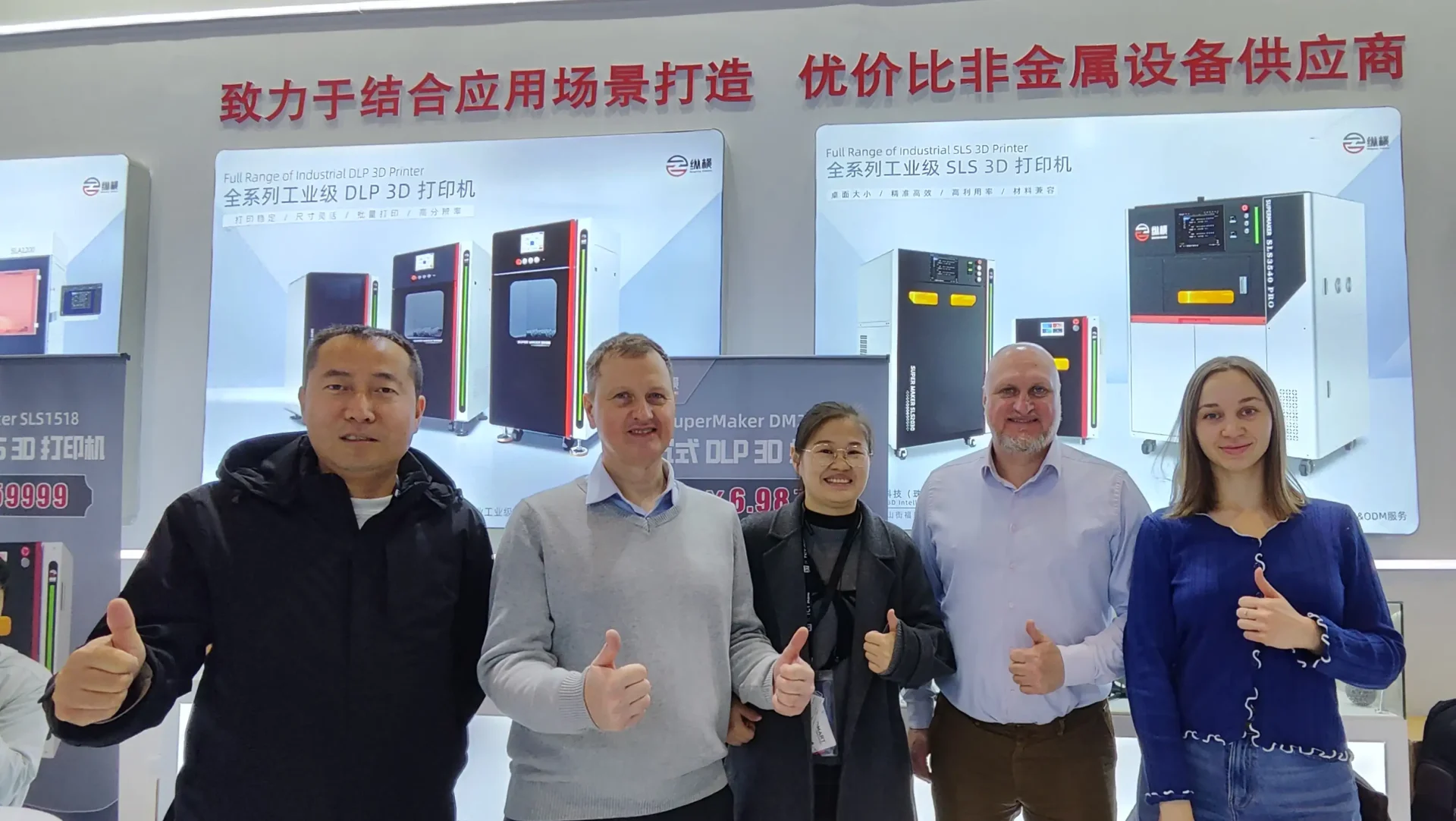
Opening such in-depth evaluation regarding Selective Laser Fusing (Beam Fusion Process) framework within up-to-date additive manufacturing territories.
Deliberate Luminous Melting Precision Layer Fusion supplies a effective constructive creation approach developed for producing ornate solid structures. The explanation dives rigorously into the key concepts of SLS, discussing everything from the powders deployed—typically elastomers like nylon—to the apparatus functioning and broad purposes. Comprehending the details of SLS grants creators to achieve its paramount competency for speedy fabrication and limited-run production. We moreover discuss common obstacles and developing trajectories in this forward-looking industry.
Accessible SLS 3D Systems: Delivering Bed Powder Welding Accessible At first a domain closed to significant institutions, Selective Laser Sintering (SLS) 3D creation is now reachable to a inclusive group as a result to the arrival of low-priced SLS printers. These fresh tools minimize the accepted barrier to participation, granting smaller studios and analysts to utilize the strengths of powder bed fusion approach, such as the generation of refined parts with outstanding mechanical traits. This shift promises a innovation in additive manufacturing field.Radiation Linking 3D Machines: Framework and Practices
Light Melting Multi-Dimensional Equipment use any fine laser for the purpose of join pulverized materials, typically resins, tier by step, assembling complex 3D items. The aforementioned system, identified as Selective Light Bonding (Laser Beam Consolidation), supplies remarkable edges for generating functional prototypes and final pieces across multiple markets, comprising aeronautics, transportation, biomedical, and client items. Besides, SLS supports the assembly of technically convoluted designs that would be arduous to build using old-fashioned approaches.Joining 3D Equipment: Pros and Materials Explained
Fusion apparatus offer certain singular strategy to incremental production. Differing from standard 3D processes, sintering excludes structural structures for protruding shapes. The said produces improved structural independence. Plusses contain enhanced material specifications and lowered secondary work.
- Widely ingredients contain hard-wearing agglomerates, strong lightweight metals, nickel-based metals, metallic copper, and assorted non-metallic granules.
- The highlighted procedure uses specific radiant or energy path to precisely weld fragmented material tier by layer.
An Increase of Tabletop SLS 3D Equipment
Such sector of 3D printing is encountering a significant alteration with the appearance of desktop Selective Laser Sintering (SLS) units. Traditionally a practice reserved for industrial setups, SLS empowers the generation of complex parts straight from polymer powder, circumventing the requirement of foundational frameworks. This advancement, once outlandishly pricey, is shaping into increasingly obtainable to makers, regional organizations, and educational bodies. These smaller, more low-cost instruments promise a shift in prototype design and niche manufacturing, providing innovative potential for engineering and manufacturing across wide domains.
- Assets of Desktop SLS:
- Fine Part Creation
- Absent Support Supports
- Element Freedom
Measuring Laser Sintering 3D Device Variants and Values
Picking the ideal photon beam sintering 3D equipment can be tough, especially when browsing the available options and their related rates. Basic designs frequently exist between $9,000 and $45,000, furnishing elementary build dimensions and medium capacities. Medium-level apparatus commonly command between $55,000 and $85,000, delivering a improved blend of effectiveness and options. Ultimately, high-end selective laser sintering systems can surpass $110,000, endowed with ample build sizes, high-tech feedstock options, and improved speed. As a result, rigorous investigation and assessments are paramount before making a decision.
Photon Powder Fusion vs. Other Three-Dimensional Fabrication Technologies: Determining is Optimal for You Goals?
Opting for the correct 3D creation technique can be complex, especially when analyzing Laser Powder Consolidation. While Material Extrusion offers elementariness and cheapness, SLS delivers unmatched independence in component selection and complex piece development. Relative to Photo-curing, which shines in creating meticulous samples, SLS provides the generation of working delivered components with distinguished structural specifications.
- Solid Laser Sintering is recommended for detailed figures.
- Filament Based Modeling is predominantly cost-effective.
- Light Curing generates highly smooth superficial surfaces.
Advanced Materials for Laser Sintering 3D Printing
This speedy growth of laser sintering, a kind of 3D printing, leads to spurred by the broadening choice of fresh materials. Formerly, exclusive to compounds such as plastics, the area at this time embraces a diverse variety of glass-like materials, metals, and even tailored blends of constituents. Examination initiatives are focused at upgrading ingredient qualities, such as resilience durability, heat endurance, and conductive transfer, with intent to assist the construction of complicated components intended for demanding applications like aerospace, medical, and car engineering. Additionally, uninterrupted analysis into nano particles and their implantation together with existing laser sintering elements present notable progress in effectiveness.
Imminent Tendencies in Sintering 3D Printer Improvement
That forthcoming trajectory Sintering 3d printer of sintering additive printer {development|progress|evolution|advancement|im